From Chat to Change: How Agentic AI in the IDE Becomes the Safest Path to Enterprise Impact
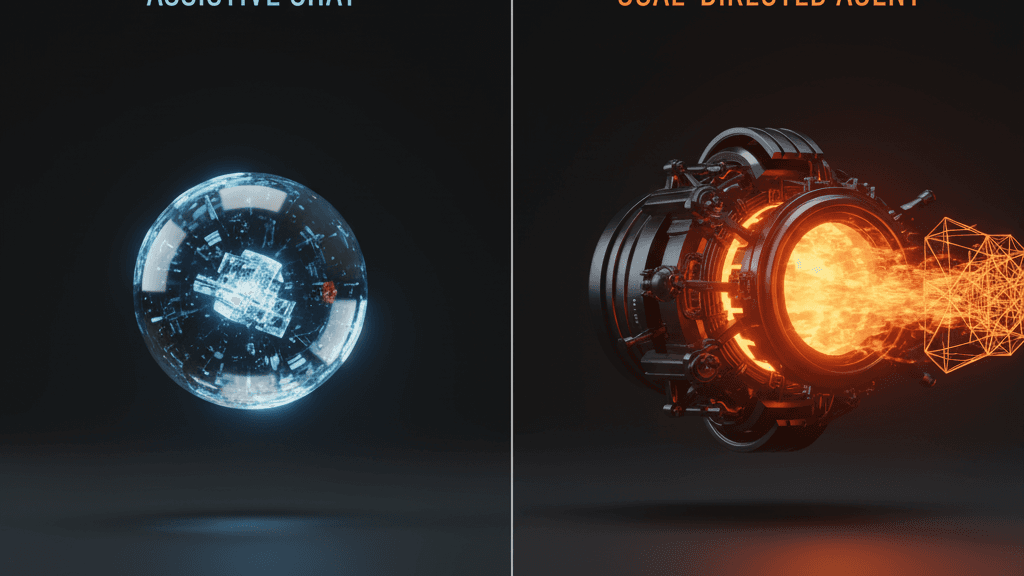
The trajectory of agentic AI adoption signals a fundamental shift in how enterprises approach artificial intelligence. By 2028, analysts forecast that autonomous AI systems will handle a meaningful share of work decisions and power core business applications—moving beyond conversational assistants to goal-directed AI execution that delivers measurable outcomes.
The Evolution from Copilots to Autonomous Agents
Current enterprise AI agents primarily function as copilots—suggesting actions, drafting content, and offering recommendations that humans must review and execute. While valuable, this assistive model limits impact to human throughput and creates the "GenAI paradox" where significant AI investment produces minimal P&L improvement.
Agentic AI trends 2028 point toward a different paradigm. Outcome-oriented AI agents that plan, act, and coordinate across systems will embed directly into enterprise software with AI integration, taking ownership of complete workflows rather than merely augmenting them.
The distinction between AI copilots vs agentic systems determines whether AI amplifies human capacity or fundamentally transforms how work gets done. Copilots require constant supervision; agents deliver completed outcomes within governance boundaries.
Why the GenAI Paradox Persists
Many enterprise AI transformation initiatives stall because they focus on interaction quality rather than business outcomes. Chat interfaces that provide helpful suggestions still require humans to translate recommendations into action, limiting scalability and diluting measurable business impact of AI.
Strategy research indicates real value emerges when AI agents in business workflows plan multi-step processes, execute autonomously, and coordinate across enterprise systems. This agent-based enterprise automation enables true leverage—agents handle routine workflows while humans focus on strategic judgment and creative problem-solving.
SyntX's Approach: Starting Where Agents Prove Safest
At SyntX, we've identified on-device coding agents as the optimal entry point for enterprise-grade AI governance and meaningful impact. Software development provides clear success metrics, well-defined constraints, and natural checkpoints for validation—making it ideal for demonstrating agentic AI capabilities.
Agentic AI inside VS Code transforms how developers work through complete workflow automation:
Automated Code Planning and Testing SyntX agents don't just suggest changes—they plan implementations, write comprehensive tests, verify correctness, and prepare AI-driven pull requests ready for human review. This AI-powered development automation completes entire development cycles autonomously.
MCP-Gated AI Permissions Rather than unrestricted system access, MCP-gated AI permissions provide precisely scoped capabilities. Agents access repositories, run test suites, and create PRs—but cannot modify production systems or reach beyond defined boundaries. This privacy-first AI deployment ensures safety while enabling autonomy.
On-Device Privacy Architecture All SyntX on-device AI workflows process code locally, keeping proprietary information within organizational boundaries. This private and secure AI agents approach eliminates the security concerns that block many enterprise AI initiatives.
Measuring Real Agentic Value
Enterprise AI strategy demands concrete metrics that demonstrate AI ROI in enterprises. SyntX focuses on outcomes that directly impact software delivery:
-
PR Cycle Time Optimization Track how quickly changes move from concept to production-ready code. Agents that autonomously complete implementation, testing, and documentation dramatically compress development timelines.
-
Defect Escape Rate Reduction Measure code quality improvements through defects reaching production. AI test stability measurement quantifies reliability gains from comprehensive automated testing.
-
Development Velocity Monitor completed features per sprint and engineering capacity freed for strategic work. Agentic AI for software engineering should demonstrably increase team output without proportional headcount growth.
These metrics separate genuine measurable business impact of AI from hype, proving that autonomous enterprise agents deliver tangible value today—not in distant futures.
Building the Enterprise Agentic Operating Model
Successful enterprise automation with AI requires rethinking workflows around agent capabilities. This hybrid human-AI collaboration model positions agents as autonomous team members that own routine tasks while humans focus on architecture decisions, strategic planning, and complex judgment calls.
Scalable AI orchestration in enterprises means coordinating multiple specialized agents across workflows—security reviewers, performance auditors, test generators—each operating within governance boundaries while contributing to shared outcomes. This cross-system AI orchestration represents the future of AI-driven workforces.
The shift to autonomous AI systems embedded in core processes defines the next phase of AI strategy and digital transformation. Organizations that establish safe, measurable agent deployments today will lead as agentic AI capabilities mature over the 2025-2028 window.
Ready to deploy enterprise AI agents that deliver measurable outcomes? Explore how SyntX brings autonomous coding workflows to your IDE with privacy-first AI deployment and concrete ROI tracking.